The science is definitely solid for companies to create these type of work environments - reduction in chronic disease risk and overall higher productivity from employees. This is great, along with other companies who stand in the meetings and pass around a medicine ball. If you have a workplace that sits a lot, this may be a good idea to increase workplace healthiness and productivity!
Wednesday, August 8, 2012
Sitting or Standing: What Does Your Company Do?
Ran across this article in the San Francisco Chronicle that talks about companies adopting standing "policies" in their workplaces to reduce sitting time.
Tuesday, August 7, 2012
How Much Do You Need to Lose to Gain?
Are you trying to lose weight? Maybe struggling to lose the goal amount of weight that you want to? For health educators, there are plenty of individuals that you know who are also attempting to lose weight. If the reason for this is to be "healthy" - meaning, they want to reduce their risk of diabetes, cardiovascular disease, cancer and other diseases, what is the magical body weight that reduces these risks? Well, it may be a bit easier than you think.
My professors always told us that if America would lose 10% of it's weight, we would be much healthier and reduce the risk of a handful of diseases. Research presented at the American Psychological Association's 120th Annual Convention reaffirms this. They found drastic reductions in risk for type 2 diabetes (58%) for people who had lost an average of 14 pounds. They go on to conclude that for overweight or obese individuals, just a 10% reduction in weight have been shown to have long term impact on sleep apnea, hypertension, qaulity of life, and a slow in the decline of mobility as they age.
So don't be stressed about losing "half your body weight" (such as the show "Extreme Makeover: Weight Loss Edition" aims to achieve), modest amounts can have a huge impact on your future.
Turns out that my professors knew a thing or two about health!
Cheers to making big improvements in our health with small steps!
My professors always told us that if America would lose 10% of it's weight, we would be much healthier and reduce the risk of a handful of diseases. Research presented at the American Psychological Association's 120th Annual Convention reaffirms this. They found drastic reductions in risk for type 2 diabetes (58%) for people who had lost an average of 14 pounds. They go on to conclude that for overweight or obese individuals, just a 10% reduction in weight have been shown to have long term impact on sleep apnea, hypertension, qaulity of life, and a slow in the decline of mobility as they age.
So don't be stressed about losing "half your body weight" (such as the show "Extreme Makeover: Weight Loss Edition" aims to achieve), modest amounts can have a huge impact on your future.
Turns out that my professors knew a thing or two about health!
Cheers to making big improvements in our health with small steps!
Thursday, August 2, 2012
A Better Measurement than BMI
I think we all know the fallacies of BMI: it doesn't take into account frame size or muscular mass so it gives a skewed result when someone has larger amounts of lean muscle mass. It was originally developed by insurance companies to categorize people for disease risk, and in my opinion, that isn't where these measurements come from. Unfortunately, many health organizations still use it, simply for the fact that an easier calculation doesn't exist. Most often times, however, when BMI is used outside of the insurance industry, it takes the weight of a grain of salt. Still, there needs to be a better, and still quick measurement to give people an accurate estimation of disease risk.
That's where the ABSI comes in. Developed recently and published on PLoS ONE, the calculation looks like this:
ABSI = (Waist Circumference) / ( (BMI)^(2/3) (Height)^(1/2) )
Sorry about the poor representation of the formula, it's easier to understand by following the link. Here's an online calculator. Basically, the formula is a beefed up version of BMI, but takes waist circumference into account. Waist circumference helps the formula take into account visceral fat (note the waist to hip ratio) - aiding in the prediction of cardiovascular diseases, diabetes, and other mortality risks.
This is still a very new measurement, so it still needs to undergo the rigorous tests of the scientific community before it gets the seal of approval, but it does hold some promise. I'll keep an eye on this one to see how it trends.
That's where the ABSI comes in. Developed recently and published on PLoS ONE, the calculation looks like this:
ABSI = (Waist Circumference) / ( (BMI)^(2/3) (Height)^(1/2) )
Sorry about the poor representation of the formula, it's easier to understand by following the link. Here's an online calculator. Basically, the formula is a beefed up version of BMI, but takes waist circumference into account. Waist circumference helps the formula take into account visceral fat (note the waist to hip ratio) - aiding in the prediction of cardiovascular diseases, diabetes, and other mortality risks.
This is still a very new measurement, so it still needs to undergo the rigorous tests of the scientific community before it gets the seal of approval, but it does hold some promise. I'll keep an eye on this one to see how it trends.
Tuesday, July 31, 2012
Artificial Sweeteners: Are the Scary Claims Real?
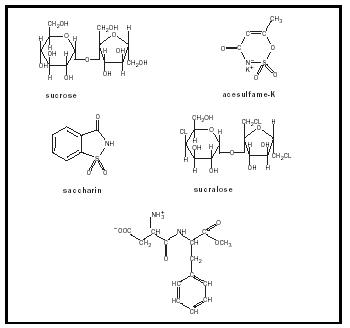
I'm an avid user of StumbleUpon - I'm kind of a random fact sort-of-guy. So, being able to hit a button and learn about random stuff is pretty cool. Although "Health" is one of my interests on there, I rarely spend much time reading the pages that come up. Why? They're either not very informative, a picture of someone exercising, or a blog/website that is based on false information. Sometimes a good one will pop up here or there... but it's not very common. There's been a certain topic that always catches my eye, however, and that's the use of artificial sweeteners. Many media outposts have claimed them as chemicals that can cause us to be fat, carcinogenic, toxic, and are just flat out bad for us. Some websites even say they would prefer to eat foods that are laced with sugar than to eat any amount of artificial sweetener. Is this really true? Let's take a look:Artificial sweeteners fall into a category of "non nutritive sweeteners" - meaning, they don't provide any nutrition in the form of calories, vitamins, minerals, etc. The only thing that they provide is sweetness. The Food and Drug Administration has come up with an Acceptable Daily Intake (ADI) for each of the sweeteners, whose levels are set at 100 fold less than any known toxic levels. In effect, consuming these sweeteners at the ADI you are no where near the known toxic levels and are safe from any potential harm.
Acesulfame-K - 15mg/kg
Aspartame - 50mg/kg
Saccharin - 5 mg/kg
Sucralose - 5 mg/kg
You may have noticed that these are units of measurement based on kg of your body mass. Here's a simple calculator that will tell you how many cans of pop or packets of sweetener you can have in a day at the ADI. That page doesn't really show you the whole picture since artificial sweeteners are being more commonly used beyond these two types of foods, but it puts it in perspective. The UK's Food Standards Agency goes further about the discussion of ADI and states that it is not expected that everyone knows them and religiously calculates them and stays under their limit. That's why they are set at 100 times less than the unsafe limit.
![]() |
| chemistryexplained.com |
Now the baseline is set, let's get into the meat of the discussion:
In looking for sound research or good website articles, it should go without saying that there are some things that need to be considered:
- Who is the publisher? Do they have any conflicts of interest?
- Is the article looking at the research as a whole, or picking and choosing research that supports a viewpoint? (You can truly find research to support any theory you want)
- How old is the research? Is it current? (I consider current anything that has been published within the last 10 years)
- What could be other causes to the outcomes of the research? Do they use good research methodology?
To me, this should be common sense, but it seems many bypass this understanding. A couple of great, well-rounded, thoroughly researched meta-analysis, recently published articles by top-notch organizations (citations between the two are above 270):
Here's the lowdown on what they say about sweeteners. "At this time, there are insufficient data to determine conclusively whether the use of NNS to displace caloric sweeteners in beverages and foods reduces added sugars or carbohydrate intakes, or benefits appetite, energy balance, body weight, or cardiometabolic risk factors." (AHA and ADA article)
The last article written by Tufts speaks specifically about the toxicity of aspartame, a concern when aspartame either breaks down in the body or when it is heated about 86 degrees Faranheit. "Besides cancer concerns, you might be prompted to avoid aspartame because of the claims rocketing around the Internet that it causes everything from lupus to multiple sclerosis to Gulf War Syndrome. These “dangers” are little more than urban legends, according to the American Council on Science and Health: “The scientific evidence does not support any of these alleged associations.”"
From these articles, the acute effects of sweeteners seems to have been found OK, but long term studies are needed to determine further risks. Keep in mind, however, that's not really a radical statement. Also, the correlation between artificial sweetener consumption and weight gain may not be causation: instead it may be caused by the mindset, "I had a diet pop today instead of sugared, so I can have desert tonight". People over consume sugar as a reward for substituting in artificial sweeteners. This claim needs more research, but interesting nonetheless.
There is certainly much more to these research articles that talk about specific concerns with non nutritive sweeteners, so I encourage you to read them - at least the abstracts and conclusions.
As with anything, keep in mind the source of the information your reading. There are LOTS of bad articles out there about nutrition and exercise. Don't fall into the trap of websites like these (it's an "all-natural" website looking to sell their products, founded and funded by Joseph Mercola, a known alternative medicine physician that believes sunscreen, drugs, and vaccinations are bad for you). Media outlets such as newspapers, TV shows (like the TLC article in the first paragraph), blogs (that's ironic, isn't it?) aren't always trustworthy, either.
Feel free to share any further concerns you may have!
Cheers to looking for for the real facts!
Thursday, July 26, 2012
The Power of Social Networks
Take a look at the TED presentation about the power of social networks. Warning: it's roughly 18 minutes long, so make sure you've got some time on your hands!
The research into social networks is pretty interesting stuff, showing links on why choose certain actions that we do and how our extended network plays a role on our daily living. This is also very profound in weight loss and weight gain: the more that obesity becomes the "norm", the easier it is for individuals to accept a unhealthy lifestyle. As health educators, wellness coordinators, personal trainers, coaches, etc., does this change our approach when counseling or helping someone through a lifestyle behavior change? Should group counseling and interventions be a tool we use more often? Just some points to ponder...
Wednesday, July 25, 2012
Corporate Wellness Participation is Less than Half: Study
Published in the Internation Journal of Behavioral Nutrition and Physical Activity, research found that participation in corporate wellness programs range from 10% to 64%, median being 33% and typical was below 50%.
Although participation levels were low, the research did find that several key factors were influential in participation rates: incentives, multi-component strategies, and a focus on multiple behaviors.
Take note, my friend.
Although participation levels were low, the research did find that several key factors were influential in participation rates: incentives, multi-component strategies, and a focus on multiple behaviors.
Take note, my friend.
Tuesday, July 24, 2012
Gallup: Nearly Half of Americans Drink Soda Daily
From Gallup:
Nearly Half of Americans Drink Soda Daily
Two-thirds of Americans drink coffee daily, unchanged from 1999
by Lydia Saad
PRINCETON, NJ -- Nearly half of Americans, 48%, report drinking at least one glass of soda per day, while 52% say they normally drink no soda. Among those who drink any soda, the average daily amount is 2.6 glasses, with 28% drinking one glass a day, on average, and 20% drinking two or more glasses.

The latest results are from Gallup's annual Consumption Habits poll, conducted July 9-12. This is Gallup's first measure of daily soda consumption.
Coffee Consumption Flat Since 1999
The same survey finds roughly two-thirds of Americans, 64%, reporting that they typically drink at least one cup of coffee per day. Perhaps surprisingly, given the explosion of upscale coffee houses and specialty coffee products being marketed to consumers over the past decade, this is nearly identical to the 63% who drank coffee in 1999.
Additionally the number of coffee cups consumed by regular coffee drinkers has not increased, and may have even declined, with the average number of reported cups consumed by coffee drinkers registering 2.5 today, compared with 2.9 in 1999. Among all Americans, including those who drink no coffee, daily coffee consumption averages 1.6 cups today compared with 1.8 cups in 1999.

Frequent Soda Drinkers No Heavier Than Non-Soda Drinkers
Unlike coffee, which may have some health benefits when consumed in moderation, soda has no known health benefits, and the sugary form can contribute to obesity, diabetes, and other health problems. Health experts say even one glass of sugary soda per day is too much.
Despite that, there is essentially no difference in the self-reported weight situation of Americans who drink two or more glasses of soda compared with those who drink none: About four in 10 of each group says they are either very or somewhat overweight. Those who drink one soda per day are slightly more likely to classify themselves as overweight. This might be explained by heavier soda drinkers consuming more diet soda than those who drink only one soda per day; however, the current survey question did not specify the type of soda consumed.

Nonwhites and Young Adults Favor Soda Over Coffee
Men and women are about equally likely to drink coffee, however, by 69% to 45%, whites are much more likely than nonwhites to drink it. And there is a significant age skew, with coffee drinking much more prevalent among middle-aged and older Americans than among those aged 18 to 34.
The pattern is somewhat the inverse when it comes to soda. In line with higher rates of obesity among blacks and Hispanics, soda drinking is slightly more common among nonwhites than whites. Young adults aged 18 to 34 and men are also slightly more likely to consume soda than their counterparts.

Bottom Line
For better or worse from a health perspective, coffee and soda are both popular with Americans, but coffee is consumed by far more adults on a regular basis. It is especially popular with whites, middle-aged, and older adults, while nonwhites and younger adults tend slightly more toward soda consumption.
With so many new options for buying premium coffee available in recent years, including at upscale coffee shops and on the menu at fast food chains, one might assume Americans' coffee consumption has grown. And it's possible Americans are drinking larger cups or stronger coffee than they did in the past. But in terms of sheer number of cups, the rate of coffee drinking is largely unchanged, with Americans currently averaging 1.6 cups per day.
As for soda, the U.S. beverage industry has recently been reporting a decline in Americans' consumption of carbonated beverages, as well as a switch by consumers to more consumption of diet soda. Nevertheless, the majority of soda sales continue to be of the sugary variety, and with nearly half of Americans drinking at least one glass daily -- with even higher rates seen among men, young adults, and minorities --the health implications for Americans remains significant.
Survey Methods
Results for this Gallup poll are based on telephone interviews conducted July 9-12, 2012 with a random sample of 1,014 adults, aged 18 and older, living in all 50 U.S. states and the District of Columbia.
For results based on the total sample of national adults, one can say with 95% confidence that the maximum margin of sampling error is ±4 percentage points.
Interviews are conducted with respondents on landline telephones and cellular phones, with interviews conducted in Spanish for respondents who are primarily Spanish-speaking. Each sample includes a minimum quota of 400 cell phone respondents and 600 landline respondents per 1,000 national adults, with additional minimum quotas among landline respondents by region. Landline telephone numbers are chosen at random among listed telephone numbers. Cell phones numbers are selected using random digit dial methods. Landline respondents are chosen at random within each household on the basis of which member had the most recent birthday.
Samples are weighted by gender, age, race, Hispanic ethnicity, education, region, adults in the household, and phone status (cell phone-only/landline only/both, cell phone mostly, and having an unlisted landline number). Demographic weighting targets are based on the March 2011 Current Population Survey figures for the aged 18 and older non-institutionalized population living in U.S. telephone households. All reported margins of sampling error include the computed design effects for weighting and sample design.
In addition to sampling error, question wording and practical difficulties in conducting surveys can introduce error or bias into the findings of public opinion polls.
For more details on Gallup's polling methodology, visit http://www.gallup.com/.
"Health Promotions in the Workplace" Review
Yup, another book review! However, this one leans more towards the textbook category. I was a bit skeptical of what I was going to receive when I bought a used edition off of Amazon for about $0.75 when it retails for $80+. But, I thought I would give it a shot and was really pleased as to what I received.
The book outlines all of the design phases of wellness initiatives, the maintenance, management, evaluation, strategies, intervention programs, and perspectives of health promotion in different settings (small business, elderly, global and the future of workplace health promotion). Overall, it seems to cover just about anything you need to implement an effective program. Here's my gripe, however:
The latest edition was published in 2001.
I consider research evidence to be "old" when it reaches the 10 year mark. While much of the information is good in this book, it is outdated. The previous edition to the current was published 8 years prior, so I'm not sure why they are taking so long to publish a new edition. If and when they do, I will most likely be finding myself buying it to get the latest information. Here's why I do like this book:
It is fair about its assessment of health promotion and workplace wellness. If evidence is clear enough, it will tell you so. It tells you when there is enough evidence to support an idea and when there is enough to proceed with caution. It also uses evidence and research to recommend different types of wellness program and activities. Take the weight management, as an example. There are many different ways to implement, from financial incentives, lay vs. professional help, weekly interventions vs. intensive, worksite vs. clinic and to top it all off, the cost/effectiveness of each. Not only that, but the book goes into detail why such an intervention is necessary in the workplace, citing research that shows the prevalence of obesity and it's health risks. Basically, it goes from the start - convincing upper management that this intervention is necessary - to finish.
This really isn't a book you can read front to back and be done with. I read the first several chapters, and that was about all I could consume and make use of. The remaining parts are reference, atleast to me, and will be used when these situations come up on planning. There aren't many reviews on Amazon, but I distinctly remember one wellness coordinator saying they use this book all the time and come back to it as reference. Hope you can find it useful, too!
The book outlines all of the design phases of wellness initiatives, the maintenance, management, evaluation, strategies, intervention programs, and perspectives of health promotion in different settings (small business, elderly, global and the future of workplace health promotion). Overall, it seems to cover just about anything you need to implement an effective program. Here's my gripe, however:
The latest edition was published in 2001.
I consider research evidence to be "old" when it reaches the 10 year mark. While much of the information is good in this book, it is outdated. The previous edition to the current was published 8 years prior, so I'm not sure why they are taking so long to publish a new edition. If and when they do, I will most likely be finding myself buying it to get the latest information. Here's why I do like this book:
It is fair about its assessment of health promotion and workplace wellness. If evidence is clear enough, it will tell you so. It tells you when there is enough evidence to support an idea and when there is enough to proceed with caution. It also uses evidence and research to recommend different types of wellness program and activities. Take the weight management, as an example. There are many different ways to implement, from financial incentives, lay vs. professional help, weekly interventions vs. intensive, worksite vs. clinic and to top it all off, the cost/effectiveness of each. Not only that, but the book goes into detail why such an intervention is necessary in the workplace, citing research that shows the prevalence of obesity and it's health risks. Basically, it goes from the start - convincing upper management that this intervention is necessary - to finish.
This really isn't a book you can read front to back and be done with. I read the first several chapters, and that was about all I could consume and make use of. The remaining parts are reference, atleast to me, and will be used when these situations come up on planning. There aren't many reviews on Amazon, but I distinctly remember one wellness coordinator saying they use this book all the time and come back to it as reference. Hope you can find it useful, too!
Milken Institutes, "An Unhealthy America"
While writing some well-being emails for work, I ran across this interesting research done by Milken Institute. I've never heard of Milken Institute, but some web searches show that it is a reputable, non-profit, non-partisan economic think tank. The original founder looks a bit shady (Mike Milken, who pleaded guilty to six accounts of securities and tax evasion). However, the reputation of the Institute seems to have outweighed the founder's woes as it seems to be highly regarded and the accomplishments it has made have been profound.
This research and summary not only looks at the current status of America's health, but looks at trends and projects what the health status will be beyond 2020. Although not factual and will only be proven with time, it is interesting to see what it will be like if current trends continue. Just a word of warning: it's not good.
Here's an interesting tidbit that can whet your palate:
They researched 7 different diseases that accounted for an economic impact of $1.3 trillion annually. Of this amount $1.1 trillion are due to lost productivity (workplace wellness, people!)
There are some really, really good graphs in there, as well:
This graph also shows the importance and the reason why so many workplace wellness initiatives are trying to find ways to calculate presenteeism. This metric can make or break a business, and is surely one of greatest things impacted by a wellness movement.
Take a look at it... and let me know if there should be red flags about this institute (ethics, conductivity, etc.).
This research and summary not only looks at the current status of America's health, but looks at trends and projects what the health status will be beyond 2020. Although not factual and will only be proven with time, it is interesting to see what it will be like if current trends continue. Just a word of warning: it's not good.
Here's an interesting tidbit that can whet your palate:
They researched 7 different diseases that accounted for an economic impact of $1.3 trillion annually. Of this amount $1.1 trillion are due to lost productivity (workplace wellness, people!)
There are some really, really good graphs in there, as well:
This graph also shows the importance and the reason why so many workplace wellness initiatives are trying to find ways to calculate presenteeism. This metric can make or break a business, and is surely one of greatest things impacted by a wellness movement.
Take a look at it... and let me know if there should be red flags about this institute (ethics, conductivity, etc.).
Thursday, July 19, 2012
"Why & How People Change Health Behaviors" - A Review
My parents would be dumbfounded to read this post. "Nate writing a book review?!?!" You see, when growing up, my parents trying to get me to read books was like trying to pull my teeth out. Unless if it was "Nate the Great" or a picture book, there was no way I was laying my eyes on it. But, when I found a purpose to read, I became more inclined to take to the pages. I read now to become more educated, to learn and to become better at what I do.
I recently wrapped up a short reading of "Why & How People Change Health Behaviors" by Joseph Leutzinger and John Harris. I really shouldn't say it is "written" by these two gents, and here's why:The book is based off of research that the authors have conducted. They have completed interviews of 44 individuals that have undergone some health behavior change and have kept that behavior change for some time now. Common health behavior changes in this book were: quit smoking, weight loss, increase physical activity, diabetes control, depression, etc. The responses from the interviews are directly transcribed to this book... literally. Even some grammatical and spelling errors found their way in there (I would assume that these would have been corrected before publishing, but maybe not), This gives the book a very unique feel and a candid view of the individual, their personality, and what it took for them to accomplish their behavior change.
This was both a good and bad thing. Good thing for the reasons above, bad thing because it wasn't what I was expecting or hoping for. When ordering this off of Amazon, I was expecting to find a book that would, at the least, contain a meta-analysis of some good research and provide some great insight into counselling individuals on behavior change. Even though it didn't fulfill this hope, it was still a good book to read and did provide some thought provoking ideas for myself.
Some themes that I took from this book:
- There was almost always a trigger for the behavior change. Something happened in that individual's life that acted as a catalyst for the change. Deaths, loved ones getting sick, birth of a child, etc.
- Only 1 or 2 times was this trigger a doctor or an authoritative figure that told them they need to change. Usually these people were ignored until the trigger happened. This is important to keep in mind for health educators, personal trainers, doctors, etc. The initial motivation to change something must come from the individual, and not from an outside source. Their mind seems to have to "click" and it take a powerful and emotional event for this to happen.
- Motivation must come from the individual and the reason for the behavior change must be personal. Many times the interviewees said "you must change for yourself and not for anyone else".
- Support group > mentors. Many people said their support group(s) (coworkers, family, friends) were essential to their success, but very few actually had mentors.
- Environment was essential for the majority of them. Some individuals even had to change their environment to be successful. Meaning, they had to change jobs, move somewhere else, find a new church, etc.
- Personality typing seems to play a critical role in how the person initiates and maintains their behavior change. As a result, learning how to personality type and how to use their personality type to help them with behavior change is probably something I will look into further.
- For the corporate wellness coordinator: a handful of individuals said that their workplace wellness program was useful or integral in their success. Whether it was a weight loss program, smoking cessation program or an on-site fitness facility, these people said it made it very easy to start or continue their behavior change.
All in all, it was an interesting book. Not something I would put at the top of my reading list, but definitely a useful tool to have and it did spur some thought provoking questions.
Cheers to reading and being more educated!
Tuesday, July 17, 2012
Video: 23 and 1/2 Hours a Day
Great video about the importance of any physical activity. If you or someone you know is struggling with exercise, remember that it just takes one step to start!
Credits:
Conceived, written, and presented by Dr. Mike Evans
Illustrated by Liisa Sorsa
Produced, directed, and filmed by Nick De Pencier
Picture and sound edit by David Schmidt
Gaffer, Martin Wojtunik
Whiteboard construction by James Vanderkleyn
Production assistant, Chris Niesing
©2011 Michael Evans and Mercury Films Inc.
Pushing Boundaries
Just to update you all on the progress of getting on-site exercise equipment at our worksite:
I just received an email from the corporate office saying that on-site exercise equipment is not permitted. The wording was pretty much, "no way, no how". Bummer!
During the time I was waiting to get permission, I had secured a lawyer that could potentially help me write a liabilities release form. I still plan on pursuing it, because this topic will come up again. Plus, it is good personal experience to draft this type of legal form.
I suppose life goes on, but I was pretty sad that I got this news. Remember my post about turn a "no" to a "yes"... well, I'm going to still live by this philosophy. I'll keep pushing the boundary to make things happen!
Friday, July 13, 2012
Just Beginning the Path to a Wellness Movement? Read This First!
There are good resources and then there are superb resources. This just so happens to be a superb resource. If you are building a wellness plan from the ground up, read this article by WELCOA's magazine, "Absolute Advantage". It's an 88 page-long, detailed outline on how, where, and when to do certain tasks for starting a movement. Stuck on how to do a needs assessment? This article will tell you why you need to do it and how to design and implement one. In most cases, the article will also point you further to other sources for additional help. The article or "guide" is meant to be comprehensive and is based upon the statistics of more than 600 wellness programs. I haven't gotten to the second part yet (an entirely separate article dedicated to the later stages of wellness implementation), but I am sure it will prove just as useful. This article is definitely a must read.Cheers to superb resources that provide top-of-the-line help!
Friday, July 6, 2012
Journal Rankings
Did you know in the category of "Sports Sciences" there are 92 periodic (presumably peer-reviewed) journals? "Nutrition and Dietetics" rakes in 77. Are all of them trustworthy? If you know anything about some certain journals and their representing companies, you would know not to trust every journal, nor every article in all journals. How can you tell which journals are better than others? Take a look at these two websites:
These two websites, in conjunction with each other, will provide you with a good amount of data on the trustworthiness of particular journals and their rankings among journals in the same field. For Journal-Ranking, exercise related journals will be listed under "Sport Science" and nutrition will be under "Nutrition and Dietetics". Once you find a journal of interest, head over to Eigenfactor to get a second viewpoint and to view the cost effectiveness of that journal. Eigenfactor has some cool graphs, but it was pretty hard to get to the fields that I was interested in, but they were certainly eye popping and informative!
Wellness Proposals - Another Useful Tool
For those of us that are starting a wellness movement or thinking about starting one, any helpful advice or resource is great to put in our toolbag. Whether it's friends, people in our professional network, or a website that can help give us a guiding light, anything that might prove useful we hold on to for future reference.
ran across this website the other day, and it's got some great information not only starting a movement, but how to evaluate it and such. Take a look at Wellness Proposals at wellnesproposals.com, they have some good free information on there (including a useful blog), but they also have some paid services.
Edit: I will be adding this one to the "Useful Links" sidebar for easy access!
ran across this website the other day, and it's got some great information not only starting a movement, but how to evaluate it and such. Take a look at Wellness Proposals at wellnesproposals.com, they have some good free information on there (including a useful blog), but they also have some paid services.
Edit: I will be adding this one to the "Useful Links" sidebar for easy access!
Tuesday, July 3, 2012
The War on High Fructose Corn Syrup
The war has gotten to the point where the Corn Refiners Association has
made an attempt (and I should say that it has failed) to change the name of
high fructose corn syrup to avoid further negative connotations this embattled energy
source has endured. Questions about this sugar and non-caloric
sweeteners are the most common questions that people ask me in the area of
nutrition. People are worried that this
sugar substance is going to cause poor health, and they have good reasons to
believe so. If you have listened to mass
media and/or read diet magazines or websites, you have probably witnessed the
articles accusing high fructose corn syrup for part of the obesity epidemic,
diabetes, and other health concerns.
The plain old table sugar (sucrose) that we are used to contains an
even amount of two “simple” sugars: glucose and fructose. These are naturally occurring sugars –
glucose is most commonly consumed from grains (in the form of very long chains),
fruits, vegetables and dairy products.
Glucose is rarely consumed in it’s single molecular form, however, it is
more commonly consumed in part of a chain such as found in breads and grains,
or linked to another sugar molecule such as fructose. Fructose is commonly found in fruits and
vegetables, hence the name.
High fructose corn syrup is under a lot of scrutiny, scrutiny that I
believe any food product should undergo.
I’m not a fan of taking specific ingredients out of your diet, or adding
this vegetable because of it’s “cancer fighting” properties, rather, I praise
well-rounded diets that include a variety of different foods yet still
includes those triple chocolate brownies that you oh-so dearly admire (in
moderation, of course!). But, what
exactly is there to fear about high fructose corn syrup?
First, what is high fructose
corn syrup?
The plain old table sugar (sucrose) that we are used to contains an
even amount of two “simple” sugars: glucose and fructose. These are naturally occurring sugars –
glucose is most commonly consumed from grains (in the form of very long chains),
fruits, vegetables and dairy products.
Glucose is rarely consumed in it’s single molecular form, however, it is
more commonly consumed in part of a chain such as found in breads and grains,
or linked to another sugar molecule such as fructose. Fructose is commonly found in fruits and
vegetables, hence the name.
In the process of taking cornstarch and making it into high fructose
corn syrup, manufacturers have the option to create different types of high
fructose corn syrup: a 55% blend of fructose and 45% glucose (used in drinks
because of physical properties) or a 42% fructose blend with 58% glucose (used
in baked goods because, again, of it’s physical properties).
In the 1960’s and 70’s, the use of high fructose corn syrup was nearly
nonexistent. As the refining process
became more efficient, it started to be cheaper for manufacturers to substitute
beet or cane sugar with high fructose corn syrup. Thus, consumption increased, and incidentally,
so did obesity and other comorbidities. The
million dollar question, the one that a lot of research efforts are focusing
on, is whether this was a coincidence or if, in fact, high fructose corn syrup
plays a role in weight gain and the incidence of other diseases and
illnesses.
Pointing towards charts and data that show high fructose corn syrup
consumption has increased dramatically really doesn’t show you the whole
picture. This is the argument made by
most people, that this increase in consumption can be blamed for many of the
health issues of Americans. However, as
HFCS has increased (page 10), sucrose consumption has decreased, and in a very parallel
fashion with HFCS. In effect, Americans
are not consuming more or less of fructose, rather, its consumption has stayed
fairly constant over the last 3 decades (data was never accumulated before
then).
Some people are skeptical of the manufacturing process of HFCS, that this
in itself, causes unknown changes within the body that cause weight gain. Physiologically, this isn’t possible. No matter where the source of carbohydrate
comes from, glucose is processed like glucose, fructose like fructose, lactose
like lactose. The body cannot decipher
the source of the molecule. On the flip
side, research has shown that fructose is more readily available for processing
(either for immediate energy needs or transforming it to fat) in high fructose
corn syrup when compared to sucrose. This is due to the fact that some fructose is “free” in HFCS, whereas in sucrose it is always bound to another glucose molecule. Keep in mind that the Princeton article was looking for psychological effects of fructose, and so they did not restrict consumption amounts. This area is in need of more research to find out if the data can stay consistent and what exactly causes the changes within the body. How’s that chemistry 101 treatin’ ya?
What should you make of all this? Considering that many scientific articles looking at meta-analyses of HFCS research, at this time there is nothing to fear (Academy of Nutrition and Dietetics, Critical Reviews of Food Science and Nutrition, American Journal of Clinical Nutrition, Mayo Clinic, Center for Disease Control). Eating a well-balanced diet that includes the limitation of added sugars will already significantly reduce any potential adverse health effects if HFCS was found to have a significant impact on obesity or other illnesses, giving you benefits that far outweigh any harm from HFCS.
When people ask me about HFCS, I tell them to avoid sugary drinks and other foods with added sugars. If necessary, consume them in moderation. It isn't a health recommendation solely based upon high fructose corn syrup, but a recommendation based on sugars as a whole.
Cheers to research and continued advancements in the area of nutritional science!
When people ask me about HFCS, I tell them to avoid sugary drinks and other foods with added sugars. If necessary, consume them in moderation. It isn't a health recommendation solely based upon high fructose corn syrup, but a recommendation based on sugars as a whole.
Cheers to research and continued advancements in the area of nutritional science!
Sunday, July 1, 2012
The Smoker's Dilemma
Wake up and grab your first cigarette. 11 minutes. After breakfast, another cigarette. 11 more minutes. By the time the day is over, the average smoker will have shorten their life by nearly 4 hours.
Ready for an onslaught of statistics?
While watching fireworks for the first time with my 11 month-old son, the two ladies in front of us seemed to be oblivious to the above numbers. In the two hour span that we watched the outhouse races and the fireworks show, the ladies each reduced their life expectancy by 44 minutes. This, combined the cost of a pack of cigarettes (in Nebraska, it's somewhere in the $5 range, New York is near $11), the additional costs of the increase in disease burden, and the added health risks that are imposed on the surrounding people the numbers are completely staggering.
Smoking, by far, is the #1 preventable cause of death, with 443,000 people dying prematurely due to this habit (this accounts to 18% of all deaths in the U.S.). The diseases and illnesses caused by smoking costs the U.S. $96 billion in healthcare costs. Taking this number and dividing it by the national population, it costs you, the individual, $303 per year. Have a family of five? No one smokes? You're still paying roughly $1500 to help pay for the healthcare of those that smoke (these numbers include the cost of stop smoking campaigns).
In a weird twist of statistics, some estimate that healthcare costs would actually rise. According to this study, costs would rise 7% for men and 4% for women. Why? People would live longer and contract other illnesses that would put a greater weight on healthcare spending. But, this isn't a story about cost vs. savings, it's a story about the impact that this habit has on your health and the health of those around you.
If you are a wellness coordinator/coach/educator, this could be your number one fight. Depending on the demographics, smoking could be costing your company big money. If this is the case, smoking cessation initiatives are a must - look into what your employer offers, their health insurance company may have a program, or even local groups and classes. Also, look into being a smoke free campus (or tobacco free) - no smoking in or near the workplace, including the parking lot. It may be a long process to become smoke free, but it is definitely worth it.
I don't ask people to stop smoking, I plea with them. It is unimaginable the amount of mental toughness that is required to quit such an addiction, but to me, there is no question as to whether it should happen.
Cheers to those who are empowered to quit their tobacco addiction!
Ready for an onslaught of statistics?
While watching fireworks for the first time with my 11 month-old son, the two ladies in front of us seemed to be oblivious to the above numbers. In the two hour span that we watched the outhouse races and the fireworks show, the ladies each reduced their life expectancy by 44 minutes. This, combined the cost of a pack of cigarettes (in Nebraska, it's somewhere in the $5 range, New York is near $11), the additional costs of the increase in disease burden, and the added health risks that are imposed on the surrounding people the numbers are completely staggering.
Smoking, by far, is the #1 preventable cause of death, with 443,000 people dying prematurely due to this habit (this accounts to 18% of all deaths in the U.S.). The diseases and illnesses caused by smoking costs the U.S. $96 billion in healthcare costs. Taking this number and dividing it by the national population, it costs you, the individual, $303 per year. Have a family of five? No one smokes? You're still paying roughly $1500 to help pay for the healthcare of those that smoke (these numbers include the cost of stop smoking campaigns).
In a weird twist of statistics, some estimate that healthcare costs would actually rise. According to this study, costs would rise 7% for men and 4% for women. Why? People would live longer and contract other illnesses that would put a greater weight on healthcare spending. But, this isn't a story about cost vs. savings, it's a story about the impact that this habit has on your health and the health of those around you.
If you are a wellness coordinator/coach/educator, this could be your number one fight. Depending on the demographics, smoking could be costing your company big money. If this is the case, smoking cessation initiatives are a must - look into what your employer offers, their health insurance company may have a program, or even local groups and classes. Also, look into being a smoke free campus (or tobacco free) - no smoking in or near the workplace, including the parking lot. It may be a long process to become smoke free, but it is definitely worth it.
I don't ask people to stop smoking, I plea with them. It is unimaginable the amount of mental toughness that is required to quit such an addiction, but to me, there is no question as to whether it should happen.
Cheers to those who are empowered to quit their tobacco addiction!
Wednesday, June 27, 2012
The Physiology and Importance of Motion at the Workplace
An article published by Wellness and Prevention, Inc. outlines an interesting approach to connect employee wellness to their engagement at the work place. Using documented research done in sport psychology, they studied the effectiveness of having "breaks" at the workplace. These "breaks" consist of 1-2 minute bouts of vigorous exercise every 30 minutes that an employee stays seated. They tested this theory at a New Balance firm and reported marked results: Employees felt increased energy levels along with an enhanced ability to focus. As a result, 82% of participating employees made changes that they would likely continue. Because of employee feedback their increased productivity, New Balance is lengthening the study by 90 days and including an extra 350 employees.
This article does lack some evidence beyond the self-reporting of employees (which is very subjective), but I have heard of this new theory put into practice at other worksites with some impressive results. If you have a sedentary workforce, take a look at putting this theory into practice. If your workforce is fairly active (like mine), utilizing this strategy during meetings could improve the effectiveness of that meeting. Just another snippet of proof that workplace wellness increases employee productivity, engagement and effectiveness!
Tuesday, June 26, 2012
Wellness "Movement" vs. "Program"
Program - "a plan or system under which action may be taken towards a goal" (merriam-webster.com)
What does the program imply? Obviously it is good to have plan in place when it comes to a wellness initiative. It is also certainly beneficial to have goals in place. But a program has a set standard, it has a boundary that you should stay within and not wander. It has rules and regulations, it is a limiting mindset.
Movement - "a series of organized activities working towards an objective. Also, an organized effort to promote or attain an end." (merriam-webster.com)
What's the difference between a program and movement? It's all in the mindset that you have. A movement implies that there are a series of calculated, strategic moves who's ultimate goal is to achieve an end. A movement is always changing, it's adapting and it doesn't limit you to certain boundaries.
This different mindset is important in the workplace wellness atmosphere. For example, if you are having to manage different job sites - the employees at each job site are going to give it a different dynamic or atmosphere. That different dynamic will change the way you approach new initiatives and solve problems. Keeping the mindset that this is a "movement" will allow you to take different, yet calculated actions depending on the circumstances.
A movement also implies that it is ever growing. You consistently find new people to jump on board and the movement continues and gets stronger.
This change in terminology is great; it keeps your mind free and puts you in the right attitude when it comes to improving employee health - which takes precedents over anything else.
Cheers to keeping your mind open and looking for any advantage to improve employee health!
Rule #2 for Starting a Wellness Program Within Your Workplace: Turn "No" to "Yes"
Desire. Compassion. Drive.
When in the position of a corporate wellness leader, you'll learn not everything comes easy. Things are tough: it's tough to get things OK'd by upper management, it's tough to get people involved, it's tough to keep going when things aren't turning out the way you want it to. This stuff happens all the time, but you have to believe in yourself and your goals.
Right now, we are struggling on getting on-site exercise equipment approved. It's a long and strenuous process, but will it be worth it in the end? You betcha! When you believe in a project, initiative or whatever it may be, work with all your might to do it. I tell people that when I believe in something, I turn "nos" into "yeses". You may be the only person that believes in what you do, but that doesn't mean that what you do doesn't matter. You know the benefits, you know the rewards, and you know the impact that it will have. Where there is a will, there is a way. Keep fighting for it, my friend!
Cheers to persistence and the belief that your cause is for the greater good!
When in the position of a corporate wellness leader, you'll learn not everything comes easy. Things are tough: it's tough to get things OK'd by upper management, it's tough to get people involved, it's tough to keep going when things aren't turning out the way you want it to. This stuff happens all the time, but you have to believe in yourself and your goals.
Right now, we are struggling on getting on-site exercise equipment approved. It's a long and strenuous process, but will it be worth it in the end? You betcha! When you believe in a project, initiative or whatever it may be, work with all your might to do it. I tell people that when I believe in something, I turn "nos" into "yeses". You may be the only person that believes in what you do, but that doesn't mean that what you do doesn't matter. You know the benefits, you know the rewards, and you know the impact that it will have. Where there is a will, there is a way. Keep fighting for it, my friend!
Cheers to persistence and the belief that your cause is for the greater good!
Sunday, June 24, 2012
The Power of Prevention
The Center for Disease Control's publication on the Power of Prevention is, well... powerful. With the U.S. healthcare's pricetag now over $2.1 trillion dollars and an estimated 90% of those costs are preventable, it becomes even more important for health educators to direct effective messages and programs towards helping people live longer lives with less diseases and illnesses.
Here are some numbers (although some are a bit outdated)drawn from the publication:
Estimated Annual Direct Medical Expenditures
Cardiovascular disease and stroke...... $313.8 billion in 2009
Cancer..... $89.0 billion in 2007
Smoking..... $96 billion in 2004
Diabetes..... $116 billion in 2007
Arthritis..... $80.8 billion in 2003
Obesity..... $61 billion in 2000*
*According to one research paper, the cost of obesity in 2008 is now $113.9 billion. In that same paper, the per person medical cost of obesity in that year was $1723.
When people ask me what the government should do to bolster the economy, I point to these numbers and tell them that the stimulus package starts with what you eat and your physical activity.
Rule #1 for Starting a Wellness Movement Within Your Workplace: Stand on the Shoulder of Giants
"If I have seen further it is by standing on the shoulder of giants." - Isaac Newton
This was, by far, the most crucial step in my process of bringing wellness to my workplace. When I began this adventure over a year ago, I sought the help of my professors. They have dedicated their lives to health promotion and education, so it was natural for them to support me and offer much needed guidance. This set the groundwork for all things to come.
After these discussions with my professors, I reached out to the other group of individuals that have been pivotal in my adventure: other successful wellness coordinators. Through some quick searches of company websites, I was able to snatch three different email addresses of area wellness coordinators. The email wasn't elaborate, nor was it fancy in any way. It was short and to the point and yet gave a brief overview of my story and what I was hoping to accomplish through any future conversations. One of them replied to my email, and so began my increasing depth of knowledge of what it takes to run a successful wellness movement at work.
Because of a single attempt to expand your professional network, you will reap many instantaneous benefits, along with potential benefits you would never see coming. For example, my first contact with an area wellness coordinator led me to find the contact information for big wig management of wellbeing at The Company - of whom I have regular contact with and are huge supporters of my efforts at my specific worksite. I know them by name, they know me by name, and they have even reached out to me for feedback on initiatives they are sending out throughout the entire enterprise. Never in my wildest dreams would I have thought this would happen because of an email I sent to a wellness coordinator in my hometown. Standing on top of giants' shoulders will propel yourself forward faster than you could imagine. Contact individuals that are experts and supporters of your cause. The worst they can say is "no", but it may turn out to be the best decision you have ever made.
Cheers to experts and supporters of your cause!
This was, by far, the most crucial step in my process of bringing wellness to my workplace. When I began this adventure over a year ago, I sought the help of my professors. They have dedicated their lives to health promotion and education, so it was natural for them to support me and offer much needed guidance. This set the groundwork for all things to come.
After these discussions with my professors, I reached out to the other group of individuals that have been pivotal in my adventure: other successful wellness coordinators. Through some quick searches of company websites, I was able to snatch three different email addresses of area wellness coordinators. The email wasn't elaborate, nor was it fancy in any way. It was short and to the point and yet gave a brief overview of my story and what I was hoping to accomplish through any future conversations. One of them replied to my email, and so began my increasing depth of knowledge of what it takes to run a successful wellness movement at work.
Because of a single attempt to expand your professional network, you will reap many instantaneous benefits, along with potential benefits you would never see coming. For example, my first contact with an area wellness coordinator led me to find the contact information for big wig management of wellbeing at The Company - of whom I have regular contact with and are huge supporters of my efforts at my specific worksite. I know them by name, they know me by name, and they have even reached out to me for feedback on initiatives they are sending out throughout the entire enterprise. Never in my wildest dreams would I have thought this would happen because of an email I sent to a wellness coordinator in my hometown. Standing on top of giants' shoulders will propel yourself forward faster than you could imagine. Contact individuals that are experts and supporters of your cause. The worst they can say is "no", but it may turn out to be the best decision you have ever made.
Cheers to experts and supporters of your cause!
Saturday, June 23, 2012
The Weight of Nations
I thought this article was interesting enough to highlight it from the "Articles" page. It talks about the average weight of certain populations and uses that country's population numbers to calculate the % weight of the entire world. The article highlights two countries:
Asia has 61% of the world's population, but their average weight is low so it takes up only 13% of the world's total biomass.
North America however, has 6% of the world's population, but takes up 34% of the total biomass. This is due to an 18.7 kg increase in average mass for this continent over the average 62kg of the world.
Source
![]() |
| Source: NASA |
North America however, has 6% of the world's population, but takes up 34% of the total biomass. This is due to an 18.7 kg increase in average mass for this continent over the average 62kg of the world.
Source
U.S. Exercising More Despite Warmer Weather
Some interesting data here:
Gallup-Healthways research shows that, on average, people are exercising more at this time of the year than compared to 2011.
This is good news, especially as obesity continues to be a health epidemic across the U.S. Keep it up America!
Friday, June 22, 2012
In a Nutshell
The Company doesn't have a formal "program" for well-being across it's enterprise. It hands over the materials to someone at the worksite and lets them do whatever they want. Our worksite had a non-existant program. That's where I came into the picture. Here's my story in a nutshell, to bring you up to speed:
Roughly a year ago, I was faced with my graduation from undergrad school with a degree in Nutrition, Exercise and Health Science (blah blah blah, it's a hybrid degree between Nutritional Science and Exercise Science) and the dive into the real world, where jobs are scarce because no one is hiring and people hold onto their jobs longer. So, my search for a "real person" job was fruitless. In defeat, I approached my worksite bosses and proposed that I do something with wellness there. "Sure! Do whatever you want!"
You don't tell me that. I have a mind that goes crazy with ideas. And it did.
When I started, The Company wanted everyone to focus on the five pillars of wellbeing (according to Gallup research): Career, Social, Financial, Physical and Community (believe it or not, that's the order of their importance). I didn't give a hoot about career wellbeing or anything other than physical. Oh, how time changes your "knowledge" into wisdom! Each day I buy more and more into this theory, because I see it every day. More on that in another post...
So, I was stuck with promoting these other four pillars that didn't make a darn difference to me. But, I came up with a plan that took minimal time to administer and maintain - besides, this was something in addition to my 40 hour/week duties, and I didn't have a lot of time to spend on this program, despite my desperate cries to do more with it. The first six months we had a mere 12 active participants. That is about 5% of our total workforce. Not bad for a start-up program, but I could certainly do better. And I did. By continuous promotion we are currently sitting near that amount times two (the number could actually be much higher)... with much more active participation by management. We've done alot in the past year that I have headed this program and we have made TONS of progress towards motivating and inspiring people to live healthier lives. But we can always do better. I'm a perfectionist, so whenever I achieve 100% participation, I still believe that we can do better. We can motivate some of the least motivated, we can help someone achieve their dream of running a marathon or getting off their blood pressure medication. You can always do better.
So, where are we at now? We are looking at getting some on-site fitness equipment. Nothing much, but somewhere to start. Two of the biggest reasons people give for not exercising are: 1. Not having the time and 2. Not wanting to pay for a membership. So we bring the equipment to them so that they can workout on their breaks at no cost to them. This is going to be a long process to get this equipment, but you can bet it will be worth it. Even if I get one person that uses the equipment religiously that never worked out in the past, it will be worth it. Did I mention that this single endeavor could result in The Company's first on-site fitness equipment in Their hundreds of worksites across the globe? Yeah, you got that right!
When we finalize the the exercise equipment and get it into the worksite, I will post on the process and necessary steps in order to do this correctly for those who are looking at doing the same.
From here, the possibilities are endless. I've had people from other worksites across the nation email me asking for our materials because they have heard or seen what we do. It is quite the honor and it is a humbling experience, especially to think about the people that I am impacting. Not just here, where I call home, but in other states where other people call home. I greatly anticipate what the future holds for our worksite and The Company, I hope one day I can become an integral part of their wellbeing initiatives!
P.S. Did you know that the shell of cashews are always removed before they are packaged and sold? That's because a cashew shell contains toxins similar to poison ivy. That's all I've got to say about nushells!
Cheers to perfection and always wanting to do better!
Thursday, June 21, 2012
Fact: $200 Lost Per Sick Day
This means an individual who "suffers" in their overall well-being can cost a company up to $28,800 per year according to Gallup's research. Those who "thrive" can cost as little as $840 a year. If your company is made up of 100 employees, and your average employee falls within the "struggling" (FYI: suffering <struggling<thriving) and you can move them to be thriving, you've just saved your company $338,400. Across a larger corporation, we'll use Apple as an example, that represents a bottom line reduction of $204 million. This is just a single metric of wellness that impacts the profitability of a company, and yet the numbers are astounding!
Cheers to number crunching and making an impact for your company!
Information gathered from Wellbeing: The Five Essential Elements http://www.amazon.com/Wellbeing-The-Five-Essential-Elements/dp/1595620400/ref=sr_1_1?ie=UTF8&qid=1340287735&sr=8-1&keywords=wellbeing+the+five+essential+elements
Cheers to number crunching and making an impact for your company!
Information gathered from Wellbeing: The Five Essential Elements http://www.amazon.com/Wellbeing-The-Five-Essential-Elements/dp/1595620400/ref=sr_1_1?ie=UTF8&qid=1340287735&sr=8-1&keywords=wellbeing+the+five+essential+elements
Wednesday, June 20, 2012
They're Leaving Us!
My boss and coworker had an interesting discussion about a particular topic that is impacted by what I do - turnover. We have unusually high turnover at our workplace, and it is such an issue that we need to come up with action plans on how to address this issue - and most importantly, we need to fix it. Why does a wellness person like me take interest in turnover?
1. Turnover, in most cases, speaks directly to engaged vs. disengaged employees http://www.gallup.com/consulting/52/Employee-Engagement.aspx (Gallup's perspective of employee engagement)
2. Employee engagement is impacted largely by their well-being.
The question then becomes - why are our employees disengaged and leaving our business for a "better" job? There could be plenty of reasons, and it certainly varies from place to place... but here, I have a hunch that people don't find their jobs worthwhile.
You see, in America, there's a war on jobs. People want to feel like their work has value and that they make a difference, not in the small sense that they make somebody's yard look greener or they fabricate mufflers for a large car company. No, they want to know that the specific job and tasks they do on a daily basis make a direct impact on how well that company does. Right now, people only feel that way if a) they are the CEO of a company or b) they make lots of money (which just so happens to be the result of "a"). How do I apply my wellness and well-being knowledge to make these people engaged?
1. Help that employee create an identity within the company. Make them feel special!
2. Show them the bigger picture.
My team doesn't do fancy stuff and they aren't the glitz and glam of The Company, but their jobs are vitally important to our success and what we do. My goal will help them realize that what they do is important to me, my boss and everyone else in The Company, and that the success of their individual efforts make our worksite one of the most profitable in the area.
Some of you may ask, "but you're a wellness coach, what are doing with employee engagement?"
Here's what I will say, "show me an individual that is happy with life that is physically fit but hates work, has a poor social network, struggles financially and doesn't get involved in the community, and I will focus solely on getting people physically fit." People don't do well in life if they pursue perfection in one area of wellbeing and forget about the rest. Moral of the story: care about the whole person and not just one side of them. As a wellness coach or program director, you have a unique stance that you know some of your employee's most embarrassing secrets (i.e. their health record). They trust you with that, they will trust you with their other problems. Do them a favor and strive to make an impact in their lives and also for your business. You do that and you will be an indispensable part of The Company.
Cheers to engaged employees!
1. Turnover, in most cases, speaks directly to engaged vs. disengaged employees http://www.gallup.com/consulting/52/Employee-Engagement.aspx (Gallup's perspective of employee engagement)
2. Employee engagement is impacted largely by their well-being.
The question then becomes - why are our employees disengaged and leaving our business for a "better" job? There could be plenty of reasons, and it certainly varies from place to place... but here, I have a hunch that people don't find their jobs worthwhile.
You see, in America, there's a war on jobs. People want to feel like their work has value and that they make a difference, not in the small sense that they make somebody's yard look greener or they fabricate mufflers for a large car company. No, they want to know that the specific job and tasks they do on a daily basis make a direct impact on how well that company does. Right now, people only feel that way if a) they are the CEO of a company or b) they make lots of money (which just so happens to be the result of "a"). How do I apply my wellness and well-being knowledge to make these people engaged?
1. Help that employee create an identity within the company. Make them feel special!
2. Show them the bigger picture.
My team doesn't do fancy stuff and they aren't the glitz and glam of The Company, but their jobs are vitally important to our success and what we do. My goal will help them realize that what they do is important to me, my boss and everyone else in The Company, and that the success of their individual efforts make our worksite one of the most profitable in the area.
Some of you may ask, "but you're a wellness coach, what are doing with employee engagement?"
Here's what I will say, "show me an individual that is happy with life that is physically fit but hates work, has a poor social network, struggles financially and doesn't get involved in the community, and I will focus solely on getting people physically fit." People don't do well in life if they pursue perfection in one area of wellbeing and forget about the rest. Moral of the story: care about the whole person and not just one side of them. As a wellness coach or program director, you have a unique stance that you know some of your employee's most embarrassing secrets (i.e. their health record). They trust you with that, they will trust you with their other problems. Do them a favor and strive to make an impact in their lives and also for your business. You do that and you will be an indispensable part of The Company.
Cheers to engaged employees!
Subscribe to:
Comments (Atom)